
Side event at Warsaw Human Dimension Conference reveals how kleptocratic regimes operate as criminal enterprises with Western complicity
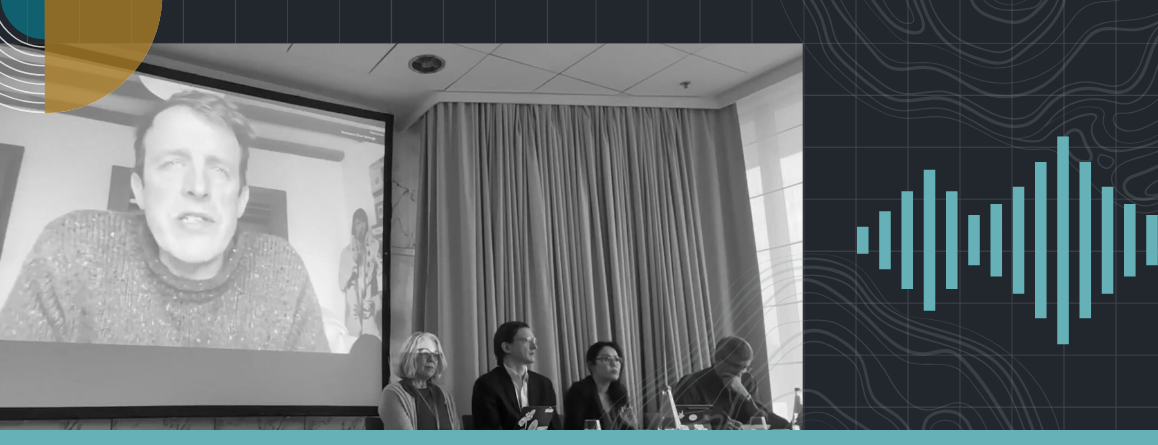
Warsaw, October 10, 2025 – Freedom For Eurasia and Crude Accountability hosted a critical side event at the OSCE’s Warsaw Human Dimension Conference (WHDC25), bringing together leading experts to expose the direct link between corruption, kleptocracy, and systematic human rights violations across Central Asia.
The panel, titled “Corruption, Kleptocracy, and Their Link to Human Rights Violations in Central Asia,” featured insights from renowned investigative journalist Oliver Bullough, environmental justice advocate Kate Watters, Central Asia expert Sébastien Peyrouse, FFE Director Tom Mayne, and FFE Chairwoman Leila Nazgül Seiitbek. Together, they revealed how Central Asian autocratic regimes function as organized criminal enterprises enriching ruling families while suppressing dissent—enabled by Western financial systems, energy companies, and political accommodation.
Wealth Is Power: How Kleptocracy Functions
Oliver Bullough, journalist and author of Butler to the World: How Britain Became the Servant of Tycoons, Tax Dodgers, Kleptocrats and Criminals, opened the discussion by explaining the fundamental equation underlying kleptocratic rule:
“The possession of wealth simply is the same thing as power.”
Bullough detailed how kleptocratic regimes in Central Asia maintain their influence and control through sophisticated offshore financial schemes actively supported and facilitated by Western financial centers, particularly London. These structures allow dictators to steal from their impoverished populations, hide the proceeds in Western real estate and financial instruments, and use that wealth to consolidate political power at home while enjoying luxury abroad.
The offshore system isn’t a bug in the global financial architecture—it’s a feature that Western economies profit from, even as it enables authoritarian rule and human rights abuses thousands of miles away.
Institutionalized Corruption: The Blurred Line Between Public and Private
Sébastien Peyrouse, Research Professor of the Central Asia Program at The George Washington University, moderated the panel and provided crucial context about the nature of governance in the region:
“Power in [Central Asia] has remained concentrated in narrow ruling circles, where the boundaries of public and private wealth are often very thin.”
Peyrouse emphasized that corruption in Central Asia is not aberrational—individual officials taking occasional bribes—but rather institutionalized as the primary mode of governance. Authoritarian governments have constructed systems where state resources flow directly into private hands, where public office exists primarily for personal enrichment, and where the distinction between governing and stealing has essentially disappeared.
This institutionalization means that addressing corruption requires not just prosecuting individual officials but dismantling entire political and economic structures built around kleptocratic extraction.
Western Energy Giants: Partnering with Kleptocracy
Kate Watters, Executive Director of Crude Accountability, exposed the role of Western and Chinese fossil fuel companies in enabling and partnering with Central Asian kleptocratic regimes.
Watters highlighted a striking example: Chevron holds a majority share of Tengiz, the largest oil field in Kazakhstan. This and similar arrangements mean that major American and European energy companies are directly enriching regimes that systematically violate human rights, suppress environmental defenders, and operate as criminal enterprises.
These companies also engage with Russian entities through infrastructure like the CPC (Caspian Pipeline Consortium) pipeline, creating complex webs of economic relationships that give kleptocratic regimes both revenue and international legitimacy.
Watters emphasized the dangers faced by environmental defenders in the region, who are targeted, imprisoned, or worse when they challenge extraction projects or demand accountability for environmental destruction. She called on OSCE participating states to take meaningful action to protect activists and hold companies accountable for their partnerships with authoritarian regimes.
The energy sector’s complicity demonstrates how Western economic interests directly enable the repression and corruption the West claims to oppose.
Kleptocrats Are Organized Crime: Don’t Fund Them
Leila Nazgül Seiitbek, Chairwoman of Freedom For Eurasia, delivered perhaps the most direct assessment of Central Asian governance:
“You really don’t throw money at a thief and hope that it is going to improve him somehow.”
Seiitbek explained that kleptocratic regimes in Central Asia are functionally indistinguishable from organized criminal groups—they use state apparatus to enrich themselves, their families, and their networks, treating public resources as personal property and governance as a protection racket.
Yet Western governments and international financial institutions continue approaching these regimes as legitimate partners for development aid, trade agreements, and investment—essentially funding criminal enterprises while hoping they’ll somehow transform into responsible governments.
Seiitbek raised urgent concern about the critical condition of civil society across the region. Human rights defenders, journalists, critics, and activists face systematic targeting by states that view any independent voice as an existential threat. Imprisonment on fabricated charges, violence, exile, and transnational repression have become standard tools for silencing dissent.
The message to the West: stop treating these regimes as governments and start recognizing them as the mafias they are. Engagement without accountability doesn’t moderate kleptocrats—it enriches and emboldens them.
Six Points of Kleptocracy: Understanding the System
Tom Mayne, Director of Freedom For Eurasia, broke down the meaning and mechanics of “kleptocracy” in six critical points, highlighting the consistent failure of the West to hold these regimes accountable.
Mayne’s analysis provided a framework for understanding how kleptocratic systems operate:
- Theft as governance: Ruling elites systematically steal public resources
- Offshore infrastructure: Stolen wealth is hidden through Western financial and legal systems
- Western enablers: Lawyers, accountants, banks, and corporate service providers facilitate and profit from kleptocracy
- Impunity: Even when exposed, kleptocrats rarely face meaningful consequences
- Transnational impact: Kleptocratic corruption doesn’t stay confined to origin countries but corrupts Western democracies through money laundering, political influence, and institutional capture
- Human rights consequences: The same systems that enable wealth theft also enable human rights violations, as regimes that can steal with impunity can repress with impunity
Mayne emphasized that addressing kleptocracy requires recognizing it as a transnational system, not just a domestic governance problem in faraway countries. Western financial centers are integral to how kleptocracy functions—they’re not passive observers but active participants.
The Transnational Web: From Extraction to Repression
Together, the panelists painted a comprehensive picture of how kleptocracy operates in Central Asia and its global implications:
Economic extraction: Natural resources—oil, gas, minerals—are controlled by ruling families and their cronies, with profits siphoned offshore rather than invested in development.
Western complicity: International energy companies partner with kleptocratic regimes, providing revenue and legitimacy. Western financial systems host stolen wealth. Western legal and corporate services hide beneficial ownership and enable money laundering.
Political repression: Regimes that steal billions cannot tolerate scrutiny, so they systematically suppress journalists, activists, and civil society. Criticism of corruption becomes “extremism.” Investigation of official wealth becomes “destabilizing the state.”
Transnational reach: When critics flee abroad, kleptocratic regimes pursue them through Interpol abuse, extradition requests, and transnational repression. Western countries sometimes cooperate, effectively becoming enforcers for authoritarian regimes.
Democratic erosion: As kleptocratic money flows into Western real estate, banks, and political systems, it gradually corrupts democratic institutions, normalizing practices incompatible with rule of law and creating constituencies that resist anti-corruption efforts.
Why This Matters: The Link Between Corruption and Human Rights
The side event’s central thesis—that corruption and human rights violations are inseparable—challenges conventional approaches that treat them as separate issues.
Why regimes that steal billions must violate human rights:
- Journalists investigating corruption must be silenced (imprisonment, violence, exile)
- Activists demanding accountability must be suppressed (fabricated charges, harassment)
- Independent judiciary must be destroyed (corruption cases can’t be heard honestly)
- Free elections must be prevented (voters might choose leaders who prosecute theft)
- Civil society must be crushed (NGOs might document and expose corruption)
Conversely, why regimes that violate human rights inevitably become corrupt:
- No accountability means officials can steal without consequences
- No free press means corruption goes unreported
- No independent courts means stolen wealth is never recovered
- No elections means corrupt leaders never face removal
- No civil society means no watchdogs monitor official conduct
Corruption and human rights violations form a mutually reinforcing system. You cannot address one without addressing the other. This is why FFE’s work documenting both kleptocratic networks and human rights abuses is essential—they’re two sides of the same authoritarian coin.
The Failure of Western Policy
Throughout the discussion, panelists returned to a troubling theme: Western policy toward Central Asian kleptocracies has failed catastrophically.
Despite decades of evidence that engagement without accountability enables rather than moderates authoritarian behavior, Western governments continue:
- Signing trade agreements with regimes whose leaders steal billions
- Hosting stolen wealth in their financial systems
- Allowing energy companies to partner with kleptocrats
- Providing development aid that enriches corrupt officials
- Accepting diplomatic relationships that legitimize criminal governance
- Processing extradition requests that enable transnational repression
The result: Kleptocratic regimes grow stronger, wealthier, and more repressive. Civil society shrinks. Human rights conditions deteriorate. And Western complicity deepens as economic interests become entrenched.
As Leila Seiitbek emphasized: You don’t throw money at a thief and hope it improves him. Yet this is precisely what Western policy continues doing.
What Needs to Change
The panelists offered clear recommendations for how OSCE participating states and democratic governments should respond:
1. Center kleptocracy and corruption in global and regional security discussions. Democratic governments must recognize that corruption is not merely a governance or development issue—it is a fundamental security threat. Kleptocracy enables authoritarianism, fuels conflict, drives migration crises, undermines democratic institutions globally, and creates the conditions for human rights atrocities. International security forums, including the OSCE, NATO, EU, and bilateral security dialogues, must treat anti-corruption and anti-kleptocracy efforts as core security priorities rather than peripheral concerns. This means integrating corruption analysis into threat assessments, making anti-kleptocracy measures central to security strategies, and recognizing that you cannot have sustainable security while kleptocratic regimes operate with impunity.
2. Recognize kleptocracy as organized crime, not governance, and treat kleptocratic officials accordingly rather than as legitimate diplomatic partners.
3. Dismantle offshore infrastructure that enables wealth hiding through beneficial ownership transparency, ending anonymous shell companies, and serious enforcement of anti-money laundering laws.
4. Hold Western enablers accountable—prosecute lawyers, bankers, and corporate service providers who facilitate kleptocracy, not just the kleptocrats themselves.
5. Condition economic engagement on human rights improvements, with real consequences (sanctions, asset freezes, trade restrictions) when regimes repress civil society or steal public resources.
6. Protect civil society and activists by refusing extradition requests for political cases, sanctioning officials involved in transnational repression, and providing genuine support for human rights defenders.
7. Stop pretending engagement moderates authoritarianism when decades of evidence prove it doesn’t. Accommodation without accountability enables and enriches dictators.
8. Support genuine accountability mechanisms including asset recovery, universal jurisdiction prosecutions, and international investigations into kleptocratic networks.
The Road Ahead
Freedom For Eurasia and Crude Accountability will continue exposing the links between corruption, environmental destruction, and human rights violations in Central Asia. This side event at WHDC25 represents part of our ongoing effort to:
- Document kleptocratic networks and the Western systems that enable them
- Advocate for policy changes that prioritize accountability over accommodation
- Support civil society facing repression for challenging corrupt regimes
- Educate Western audiences about how kleptocracy affects their own societies
- Push for enforcement of existing anti-corruption and anti-money laundering laws
The stakes are clear: Central Asian kleptocracy doesn’t just harm the 80 million people living under these regimes. It corrupts Western democracies, undermines international law, enables environmental destruction, and demonstrates that organized crime can function as government if it’s wealthy and geopolitically convenient enough to accommodate.
Stopping this requires recognizing that the possession of wealth is the same thing as power—and that Western systems currently serve to concentrate both in the hands of Central Asian dictators who use them to repress, steal, and destroy with impunity.
Watch the Full Side Event
The complete panel discussion, including detailed presentations from all speakers and audience Q&A, is available on YouTube:
Watch: “Corruption, Kleptocracy, and Their Link to Human Rights Violations in Central Asia”
We encourage policymakers, journalists, civil society organizations, and concerned citizens to watch and share this discussion. Understanding how kleptocracy functions—and how the West enables it—is essential to changing policies that currently serve dictators rather than the people they oppress.
About Freedom For Eurasia
Freedom For Eurasia is a non-governmental organization dedicated to documenting human rights violations, exposing corruption and kleptocracy, supporting refugees facing political persecution, and advocating for accountability across Central Asia and the post-Soviet space. Our work includes investigative research into kleptocratic networks, emergency support for dissidents facing transnational repression, policy advocacy with Western governments, and efforts to strengthen civil society in the region.
About Crude Accountability
Crude Accountability is an environmental and human rights organization that supports civil society and community-driven advocacy in the oil-rich Caspian and Black Sea region. The organization works to promote greater corporate and government accountability, transparency, and respect for human rights and the environment.
Media Contact
For interviews, additional information, or to discuss the findings presented at this side event, please contact Freedom For Eurasia at info@freedomforeurasia.org or freedomeurasia@protonmail.com
“You really don’t throw money at a thief and hope that it is going to improve him somehow.” The question is whether Western governments will finally learn this lesson—or continue funding the thieves who rule Central Asia while their people suffer.