
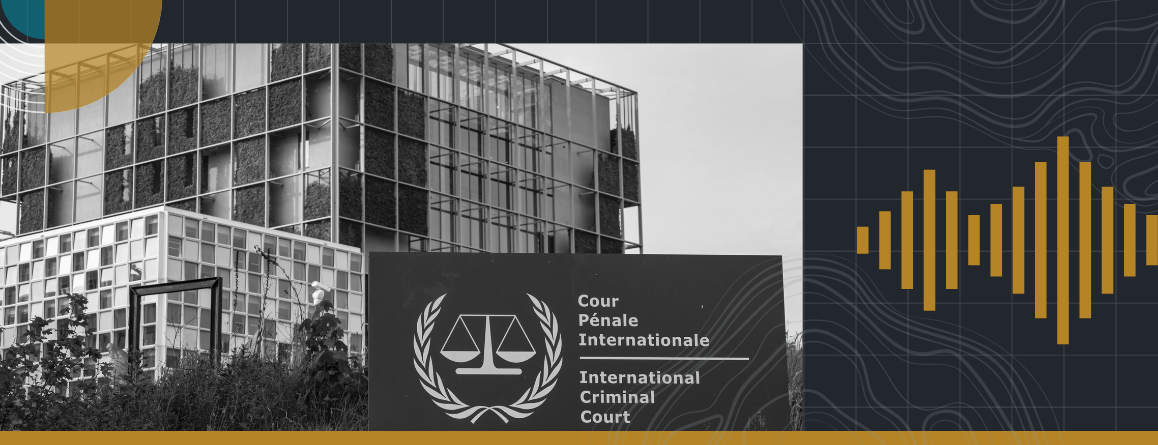
10 April will mark one year since a complaint was submitted to the International Criminal Court against Tajik President Emomali Rahmon by a coalition of human rights groups and Tajik exiled activists. While expectations for rapid progress were never realistic, the anniversary offers a moment to assess both where the case stands and what it reveals about the broader struggle for accountability in closed authoritarian systems.
The complaint is currently at the stage of preliminary examination. At this phase the Court will assess if it has jurisdiction, whether the case is admissible, and whether there is a reasonable basis to proceed with a full investigation. This process is inherently technical and often lengthy, particularly in cases involving states where access to evidence is severely restricted and where cooperation with international mechanisms is absent.
Tajikistan represents precisely such a context. The country has, over the past decade, consolidated into a highly controlled political environment marked by the systematic dismantling of independent media, the persecution of political opposition, and widespread allegations of arbitrary detention, torture, and transnational repression. In such conditions, documenting violations is not only difficult — it is dangerous.
Evidence collection relies heavily on exile networks, remote documentation methodologies, and a limited number of trusted sources operating under significant risk. Journalists, lawyers, activists, and even relatives of victims inside the country face potential retaliation, including detention, ill-treatment, and pressure on their families. As a result, much of the available testimony comes from individuals who have already fled Tajikistan. Even then, safety is relative: transnational repression — through intimidation, surveillance, and misuse of international legal mechanisms — continues to affect diaspora communities.
This reality raises a broader and increasingly urgent question: does international law still function as an effective tool for accountability?
There is no denying that international justice mechanisms are under strain. Authoritarian governments have become more sophisticated in evading scrutiny, while geopolitical fragmentation has weakened collective enforcement. In many cases, violations occur with apparent impunity, reinforcing perceptions that international law is either selective or ineffective.
Yet dismissing these mechanisms entirely would be both analytically flawed and strategically counterproductive. Institutions such as the International Criminal Court, alongside UN procedures, regional human rights systems, and targeted sanctions regimes, continue to play a critical role — not necessarily through immediate enforcement, but through the gradual accumulation of legal, political, and reputational pressure.
Accountability in such contexts is rarely linear. It develops incrementally: through the preservation of evidence, the documentation of patterns of abuse, and the sustained engagement of international actors. Over time, these processes can translate into concrete consequences — restrictions on international mobility, asset freezes, diplomatic isolation, and, ultimately, criminal liability.
For citizens of Tajikistan, this means that while justice may not be immediate, it remains possible. The continued documentation of violations, the safeguarding of testimonies, and the engagement with international mechanisms are not symbolic acts; they are foundational to any future process of accountability.
History offers numerous examples where systems once considered impermeable eventually became subject to legal scrutiny. The determining factors were persistence, coordination, and the refusal to allow violations to disappear into silence.
One year after the ICC complaint, the case against impunity in Tajikistan is still being built. Its progress may be slow, but its significance lies precisely in that persistence: in ensuring that even in the most restrictive environments, the prospect of accountability is not extinguished, but deferred — and, ultimately, pursued.
Watch interview of Freedom For Euraisa Chairwoman Leila Seiitbek with Azda TV