
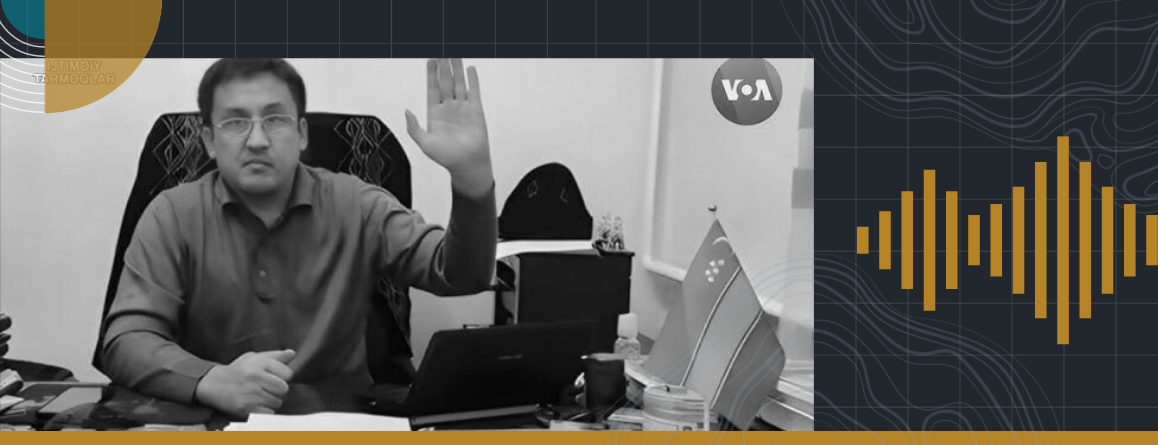
Freedom for Eurasia’s response below covers substantive issues and claims made in the Uzbek government’s reply to the United Nations and Special Rapporteurs regarding the detention and treatment of Dauletmurat Tajimuratov, drawing on independent reports and international standards for context.
On alleged riots and criminal charges
Uzbek authorities claim Tajimuratov instigated mass unrest in Karakalpakstan in July 2022, including incitement to violence and attacks on public buildings, and that he was prosecuted under clear legal procedures. However, multiple international observers and country reports have documented serious due process concerns and dispute the characterization of peaceful assembly as criminal activity. Important questions remain over whether the authorities ensured the right to peaceful protest and whether the government’s response involved excessive force and arbitrary arrests .
Procedural rights, legal defence, and trial access
The government asserts Tajimuratov’s rights to defence, lawyer access, family visits, and a fair, public trial were fully protected, and that appeals were permitted. Yet, civil society and UN experts have criticized the opacity of judicial processes, reporting closed hearings, denial of access to evidence, and intimidation against lawyers acting for political cases. The government’s insistence that all rights were met is contradicted by the numerous appeals and international requests for review.
Prison conditions, health, and safety
Uzbekistan claims prisoners including Tajimuratov receive adequate food, sanitation, medical care, and safe working conditions, with independent monitoring and inspections finding no violations. However, detailed accounts from prisoners, activists and rights watchdogs describe overcrowding, denial of basic amenities, poor hygiene, lack of medical attention, and unsafe and life-threatening prison labor conditions. Allegations of poor bedding, restricted family access, solitary confinement for arbitrary reasons, and deprivation of food especially during Ramadan are dismissed as unfounded, with no complaints “received” a claim disputed by outside monitors.
Allegations of abuse, retaliation, and transparency
The Uzbek government categorically denies any physical or psychological abuse, torture, intimidation, or retaliation, citing internal investigations, medical audits, and the findings of official and ombudsman visits. Nevertheless, the lack of transparent, independent scrutiny, and the systematic exclusion of foreign human rights researchers and independent monitors from Uzbek prisons cast doubt on claims of accountability. Tajimuratov’s complaints of abuse, threats, and restrictions are dismissed as unsupported, often without offering real access to evidence or unbiased review.
Access to family, calls, correspondence, and complaints
The response details Tajimuratov’s routine access to family visits, phone calls, and correspondence, stressing that any delays were justified and all procedures followed. However, independent reporting repeatedly highlights arbitrary curtailment of prisoner communications, unexplained postponements, and systematic reduction of external contact, especially in politically sensitive cases such as Tajimuratov’s case.
Investigations, accountability, and requests for release
Uzbekistan rejects calls for Tajimuratov’s release or compensation, claiming no legal violations and upholding its courts’ rulings. Official inquiries purportedly found no grounds to proceed with complaints on torture, inhumane conditions, or rights violations, while promises of ongoing supervision lack meaningful transparency or independent validation.
International law, human rights commitments, and constructive engagement
The government repeatedly references respect for international treaties, the Mandela Rules, and dialogue with the UN, emphasizing sovereignty and the reliability of official data. However, ongoing bans on international researchers, persistent concerns about fair trial rights, use of closed-door procedures, and lack of remedy for abuse allegations undermine these commitments.
The government’s reliance on the Ombudsman and “community-based groups”
In its official reply, the Government repeatedly cites monitoring visits by the Ombudsman of Uzbekistan and “community-based groups” or Uzbek NGOs as evidence that no violations have occurred and that Mr Tajimuratov is treated “in accordance with international standards.” However, these mechanisms lack independence and cannot be regarded as credible sources of verification: The Office of the Commissioner for Human Rights (Ombudsman) operates under the Oliy Majlis (Parliament), whose members are aligned with the executive branch. Its leadership and mandate are heavily influenced by the Presidential Administration, compromising its impartiality. The UN Human Rights Committee and European Parliament have repeatedly noted the lack of functional independence of Uzbekistan’s national human rights institutions and domestically approved NGOs, which often serve to validate government positions rather than investigate abuses. The so-called “community-based groups” referenced in the Government’s report are typically government-registered, pro-government organizations whose representatives require state approval to visit detention facilities. No international or independent civil-society observers have been permitted to accompany such visits or to conduct private interviews with detainees. Consequently, these “monitoring” mechanisms cannot substitute for genuine, independent, and transparent oversight.
Independent assessment and recommendations
Based on documented patterns of arbitrary detention, lack of access for independent monitors, repeated retaliatory tactics toward activists, and continued evidence of poor prison conditions, Freedom for Eurasia urges:
- A transparent, impartial, international investigation into conditions and complaints by Tajimuratov and all other prisoners.
- Lifting all restrictions on the entry of human rights researchers and independent observers to Uzbekistan.
- Guaranteeing fair and open trials, full legal defence access, and unrestricted communication for political detainees.
- Full implementation of international human rights obligations in letter and practice, not just official statements.
The official response from Uzbekistan does not meaningfully address the widespread documentation of human rights abuses, nor does it provide for independent oversight, transparency, or effective remedies for rights violations.