Vienna / Bishkek
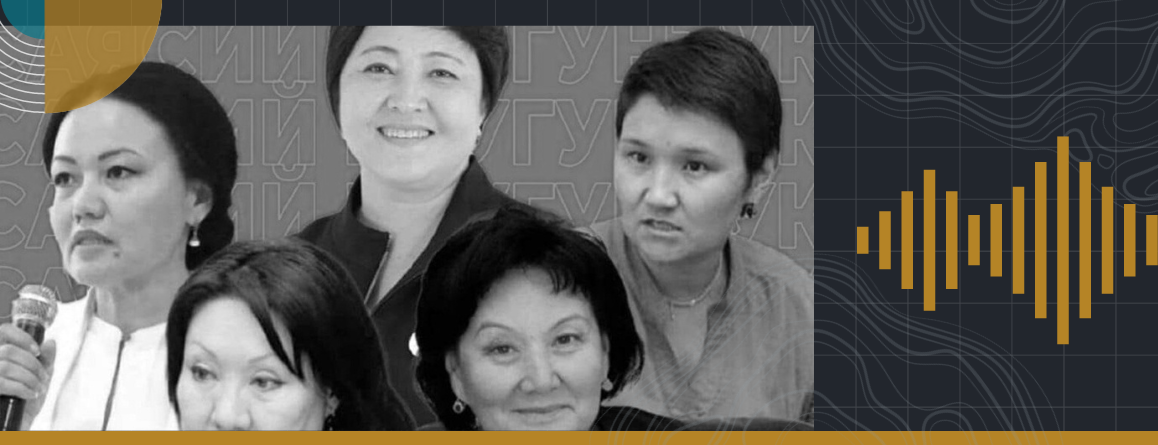
Freedom for Eurasia welcomes the decision of the United Nations Working Group on Arbitrary Detention, which concluded that the detention of Kyrgyz civic leaders Klara Sooronkulova, Rita Karasartova, Gulnara Dzhurabayeva, Asya (Asiya) Sasykbayeva, and Perizat Suranova was arbitrary and violated fundamental international human rights protections.
In its opinion adopted in November 2025, the UN Working Group determined that the deprivation of liberty of the five women violated Articles 3, 9, 19 and 20 of the Universal Declaration of Human Rights and Articles 9, 14, 19 and 21 of the International Covenant on Civil and Political Rights, to which Kyrgyzstan is a party.
The women were arrested in October 2022 after forming a public committee to discuss the controversial border agreement between Kyrgyzstan and Uzbekistan concerning the Kempir-Abad reservoir, a critical water resource affecting communities in southern Kyrgyzstan. According to the UN experts, their activities constituted the peaceful exercise of the rights to freedom of expression, assembly and association, yet they were prosecuted under vague criminal provisions related to organizing mass riots and attempting to seize power.
The Working Group emphasized that the women were held in prolonged pre-trial detention for approximately 19 months, despite posing no flight risk and despite the absence of evidence supporting the charges. In June 2024, a Bishkek court acquitted the defendants due to the absence of any criminal offense, yet authorities continued to impose restrictive measures, including house arrest.
The UN experts concluded that maintaining restrictions on the women after their acquittal amounted to a flagrant violation of international law, stressing that once a court has determined that no crime occurred, the legal basis for deprivation of liberty ceases to exist.
The Working Group also expressed concern about the subsequent prosecution of Rita Karasartova, who was re-arrested in April 2025 after sharing a letter on social media from another activist. The experts noted that such actions appear to reflect a pattern of “revolving door” or retaliatory prosecutions used to silence critics and civic actors.
Freedom for Eurasia calls on the Government of Kyrgyzstan to fully implement the recommendations of the UN Working Group, including:
- Immediately lifting all remaining restrictions on the five civic leaders
- Providing effective remedies and compensation for the violations they suffered
- Conducting an independent investigation into the circumstances of their arbitrary detention
- Reforming legislation used to criminalize peaceful civic activity
The case highlights a broader deterioration of civic space in Kyrgyzstan. Once considered the most politically pluralistic country in Central Asia, the country has witnessed increasing pressure against independent media, civil society organizations and political critics.
“The UN decision confirms what civil society has been saying from the beginning: these prosecutions were politically motivated and designed to silence legitimate public debate,” said Freedom for Eurasia. “Kyrgyzstan must now demonstrate that it respects its international obligations and reverse the growing pattern of repression against peaceful civic actors.”
Freedom for Eurasia urges international partners, including the European Union and the United Nations, to closely monitor the implementation of the Working Group’s recommendations and to ensure that Kyrgyzstan’s international commitments on human rights are upheld.